Rudra Havan
Rudra Havan is a fire ceremony centred on Lord Shiva in His Rudra aspect, with offerings into the sacred fire while portions of Sri Rudram or related Rudra mantras are chanted. Fam
Rudra Havan
रुद्र हवन
The rite
Rudra Havan is a fire ceremony centred on Lord Shiva in His Rudra aspect, with offerings into the sacred fire while portions of Sri Rudram or related Rudra mantras are chanted. Families request it at home for spiritual strength, to mark a serious sankalp, or when advised after jyotish review—always as worship, not as a promise of a particular worldly result. In Bengaluru, Pandit Mrityunjay Sharma sets up the havan kund in a ventilated space and guides the family through each ahuti. The full samagri list is shared on WhatsApp before the day.
Time at the house: 3–5 hours for a full Rudra havan; shorter sankalp versions about 2–3 hours
Pandit Mrityunjay Sharma does this at the house in Bengaluru. The fee is not printed on this page. It is sent on WhatsApp with the material list.
Why families book it
The ritual concentrates Vedic sound and fire offerings in one sitting, which many devotees find fitting for times of change, health concerns, or yearly Shiva remembrance. Doing it at home lets elders participate without travel and keeps the focus on your family’s sankalp.
Shastra speaks of Rudra as the healer and destroyer of inner obstacles; the pandit does not claim cures or job outcomes. You choose the scale—shorter sankalp havan or a longer recitation—when you book.
When families ask
- Maha Shivaratri, Shravan Mondays, or Pradosh when families observe Shiva at home
- After personal or priestly advice to offer Rudra havan with discipline
- Before or after major life events as a devotional sankalp, not for guaranteed results
- Annual remembrance days when the family already worships Shiva regularly
Short vidhi
- Ganesh invocation, punyahavachan, and sankalp stating purpose and names
- Kalash and Shiva lingam or image sthapana with abhishek preparation
- Anganyasa and preparatory mantras linking the yajamana to the ritual
- Chanting of Rudra portions (or Namakam-Chamakam segments as time allows)
- Continuous ahutis of ghee, samidha, and prescribed dravyas into the havan kund
- Purnahuti with complete offering and final Rudra peace mantras
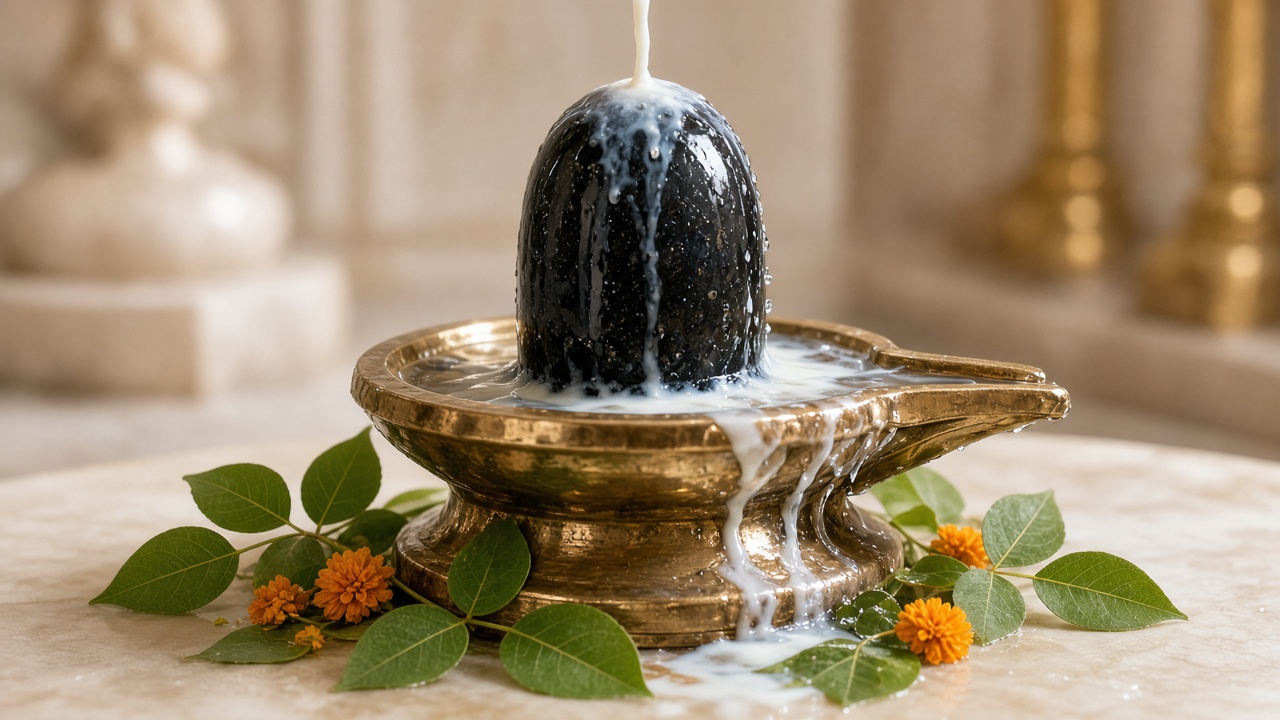
- Abhishek on lingam or image with milk, water, and panchamrit if included
- Arati, prasad to family, and visarjan of kalash water in plants
The pandit confirms the order on WhatsApp before the visit.
Samagri
- Brass or copper havan kund with stand and spoon
- Samidha, cow-dung cakes, or approved wood for indoor havan
- Ghee in a dedicated ahuti spoon and camphor
- Black sesame, barley, and rice for mixed offerings
- Bilva leaves, datura or dhatura if tradition allows, and bael fruit when in season
- Panchamrit ingredients if abhishek is included
- Shiva lingam or framed image on clean altar cloth
- Flowers—preferably white or bilva—and sandal paste
- Fruits, coconut, and betel nut for naivedya
- Kalash, mango leaves, red thread, and turmeric
- Incense, diya, and cotton wicks
- New dhoti or uttariya for yajamana as per family custom
- Large tray to catch abhishek water safely indoors
The exact list for your day is sent on WhatsApp. This page does not sell a kit and does not say materials are included in a fee.
Questions
How is Rudra Havan different from Rudrabhishek alone?
Rudra Havan emphasises fire offerings with Rudra mantras. Rudrabhishek focuses on bathing the lingam. Many families combine both when time permits; the pandit plans order on WhatsApp.
Can Rudra Havan be done in an apartment?
Yes with a smoke-managed kund near an open window or terrace, subject to society rules. Share your layout so ventilation and safety are confirmed in advance.
Do we need to fast before Rudra Havan?
Light fasting or satvik food is common but not mandatory for every family. Mrityunjay Sharma notes what is comfortable for elders and children attending.
Is Sri Rudram chanted fully in one home visit?
Time and stamina decide. A full recitation takes longer; a sincere abbreviated havan with key sections is also valid when the family agrees on scope beforehand.
Who performs the ahutis?
The pandit leads mantras; the yajamana or a family member offers ghee as directed. Children can assist with flowers under adult supervision.
What day is best for Rudra Havan?
Mondays, Pradosh, and Shivaratri are popular. Your family calendar and jyotish notes, if any, are discussed when you book—not fixed here on the page.
Will this remove graha dosha automatically?
The ritual is worship of Rudra. Astrological remedies vary by chart; the pandit does not promise planetary results, only proper Vedic order at your home.