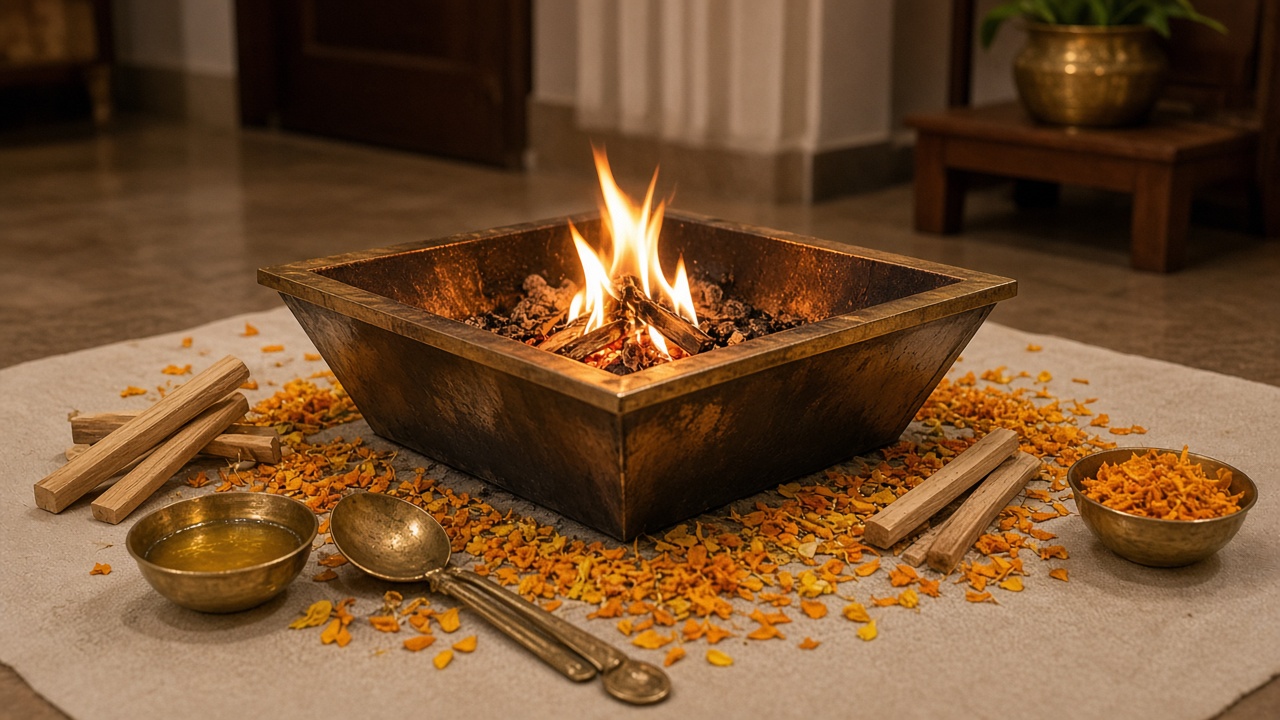
Chandi Homa at Home
Chandi Homa is the homa form of worship to Chandi Devi, aligning Durga's protective energy with Vedic fire offerings. While similar to Chandi havan in spirit, families may use the
Chandi Homa at Home
चंडी होम
The rite
Chandi Homa is the homa form of worship to Chandi Devi, aligning Durga's protective energy with Vedic fire offerings. While similar to Chandi havan in spirit, families may use the term homa when following a South Indian–North Indian blended paddhati at home. Pandit Mrityunjay Sharma leads the ceremony in Bengaluru residences, adjusting mantra batches and dravya for your space. Expect guidance on red altar cloth, Devi photograph or idol, and safe agni setup shared before arrival via WhatsApp. Dress the altar the night before to save morning rush. If rain threatens, keep a backup date discussed with panditji during booking.
Time at the house: 3–5 hours
Pandit Mrityunjay Sharma does this at the house in Bengaluru. The fee is not printed on this page. It is sent on WhatsApp with the material list.
Why families book it
Homa gives a tangible rhythm—each ahuti marking surrender of a worry or gratitude for protection. It is chosen when path alone feels incomplete or when astrologers prescribe agni for Chandi dosha.
Panditji teaches family volunteers how to feed ghee without disturbing the flame, and he does not advertise miraculous removals of enemies or debts. Spiritual focus stays on Devi remembrance and household peace.
If neighbours share the terrace, post a polite notice about the homa window. Leftover flowers can be composted or placed at a tulsi plant rather than discarded in mixed waste. Red clothing for participants is optional but welcomed.
When families ask
- On Vijayadashami or the tenth day after Navaratri garba at home
- When relocating offices within Bengaluru and elders want Devi homa
- After frightening dreams or anxiety spells if spiritual counsel suggests homa
- During vow completion for a Devi upavasa
- When pairing homa with a new business inauguration puja
Short vidhi
- Site cleaning and rangoli at the homa mandap
- Sankalpa naming devotees and the homa purpose in general terms
- Ganapati and Matrika puja
- Establishing Chandi murti or image with shodshopachar welcome
- Agni prathistha and dhyana of the fire as witness
- Chandi homa mantras with alternating ghee and samagri ahutis
- Kumari puja or symbolic girl-child honour if family observes it
- Abhisheka of Devi with panchamrit or milk as time allows
- Maha arati and distribution of teertha
- Blessings to each family member with akshata
- Instructions for leftover homa samagri disposal
The pandit confirms the order on WhatsApp before the visit.
Samagri
- Chandi Devi photo or brass idol
- Homa kund with ghee bowl and spoon
- Samidha and dried coconut pieces
- Navadhanya mix for grain ahutis
- Red and yellow flowers
- Kumkum, haldi, and chandan
- Panchamrit ingredients if abhisheka planned
- Saree or red blouse for Devi vastra
- Sweets—boondi or laddu for naivedya
- Banana, pomegranate, and seasonal fruit
- Incense, camphor, and diya set
- Kalasha with thread and leaves
- Akshata in separate bowls for family
- Large tray to catch flower offerings
- Ventilation fan or open terrace access
The exact list for your day is sent on WhatsApp. This page does not sell a kit and does not say materials are included in a fee.
Questions
Is Chandi Homa the same as Chandi Havan?
Both use fire for Devi worship; naming follows family or astrologer preference. Panditji matches the paddhati you request.
Can homa happen indoors without a balcony?
A small homa may run near an open window with approval; many societies prefer terrace slots. Discuss layout early.
Should we invite neighbours to receive prasad?
Optional and kind; prepare extra sweets if you plan to share.
Are non-family members allowed to watch?
Respectful guests may observe quietly; photography during mantras is discouraged unless panditji agrees.
What time of day is best?
Morning or evening homas are common. Midday heat on terraces is avoided in Bengaluru summers.
Does homa replace Navaratri kalash puja?
No—it complements or concludes a Navaratri cycle. Kalash days remain separate if you observe them.
How do we handle homa ash?
Ash may be collected at a tulsi plant or dispersed in running water per elders' advice—not in kitchen bins.
Can we reuse homa ash?
Some families place ash at tulsi; others immerse in water per elders. Panditji advises at the end.